Thursday, December 21, 2017

Dino Bios: Megalneusaurus.

Megalneusaurus:
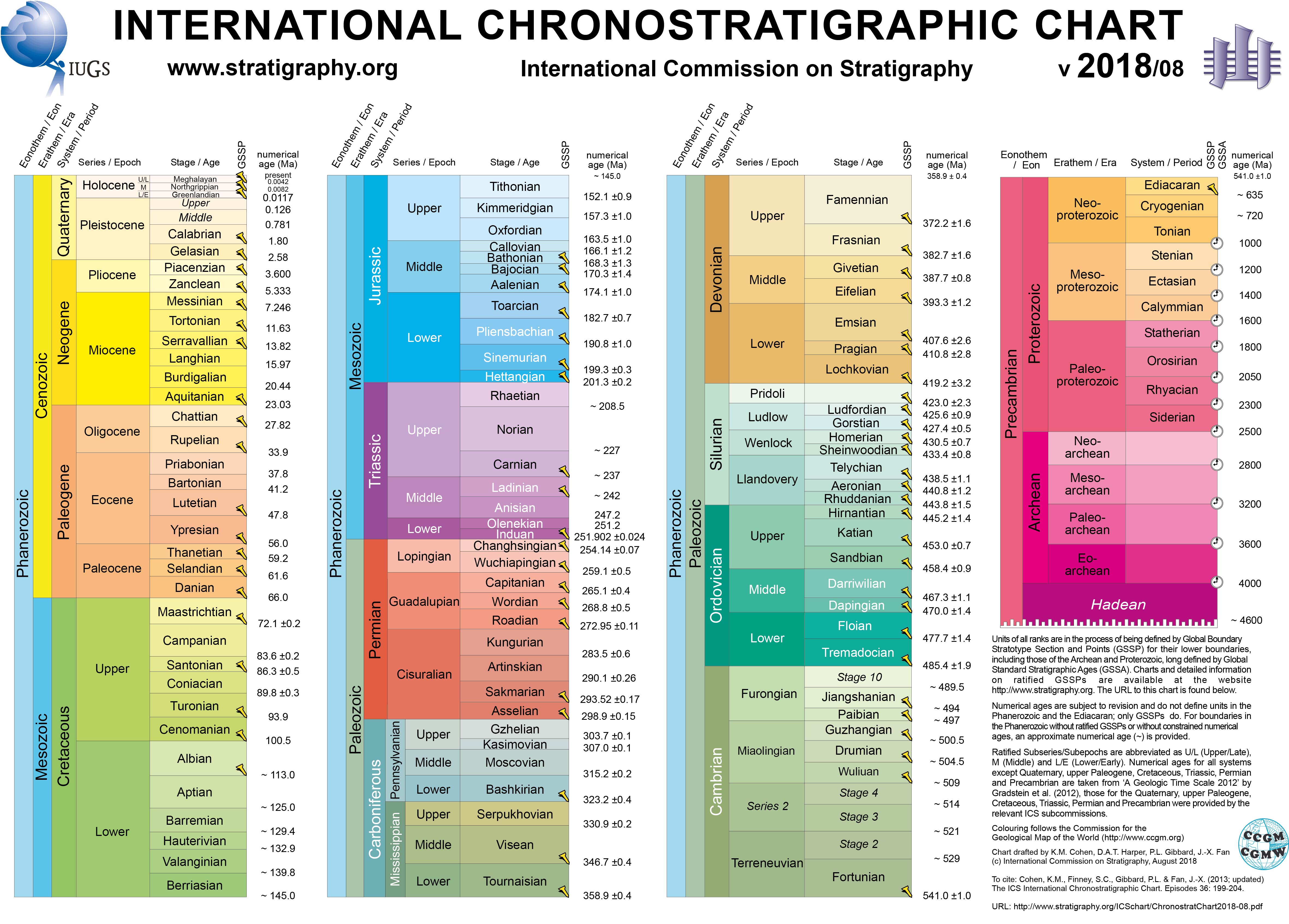
Time: 164-145 million years ago, Oxfordian-Tithonian of the late Jurassic period.
Place: North America.
Length: 47-52 feet (14.4-15.8 meters).
Skull Length: 272.4-300 cm.
Diet: Carnivore.

This is my favorite pliosaur, but it isn't that well known. So let's talk about it!

Description:
The pliosauroidea were large marine reptiles that were the top predators of their time. Megalneusaurus was one of the largest pliosaurs to have lived. The holotype, UW 4602, and UANL-FCT-R2, the "Monster of Aramberri" specimen, were 52 feet (15.8 meters) long and had skulls that were 300 cm long. Another specimen from Alaska was 47 feet (14.4 meters) long, with a skull that was 272.4 cm long. These large skulls, along with their large bodies, gave large pliosaurs the ability to hunt a variety of prey (Foffa et al., 2014, "Conclusions").

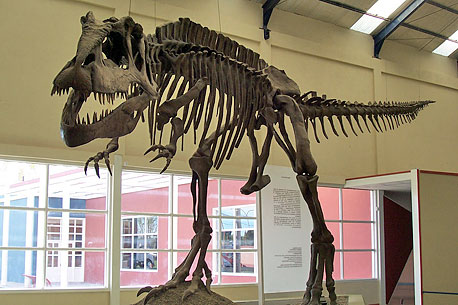
UANL-FCT-R2 ("Monster of Aramberri) Skull (Vengeance from the Deep, "Pliosaur Size"):
Prey:
Megalneusaurus hunted the ichthyosaurs Ophthalmosaurus and Baptanodon, and the plesiosaurs Pantosaurus and Tatenectes.

Megalneusaurus Hunting Ophthalmosaurus:
Links:
Original Papers:
Science (1895):
https://science.sciencemag.org/content/2/40/449.1
Knight (1898) (pg. 379):
https://books.google.com/books?id=9FY7AQAAIAAJ&pg=PA380&lpg=PA380&dq=megalneusaurus+centrum+width&source=bl&ots=I0pjh9Mzig&sig=ACfU3U3BIE5eFVswQm7hKyhPl12Ik4AALw&hl=en&sa=X&ved=2ahUKEwia8c-ouaTiAhXo1FkKHSNQDNsQ6AEwAnoECAkQAQ#v=onepage&q=megalneusaurus%20centrum%20width&f=false
Size:
https://psdinosaurs.blogspot.com/2019/05/size-calculations-for-pliosaurs.html
Time:
International Chronostratigraphic Chart (2019 Version):
http://stratigraphy.org/ICSchart/ChronostratChart2019-05.jpg
Link 2:
http://stratigraphy.org/index.php/ics-chart-timescale
Time:
Wahl et al., (2007) ("Abstract"):
https://www.academia.edu/2903720/Rediscovery_of_Wilbur_Knights_Megalneusaurus_rex_site_New_material_from_an_old_pit 
Weems and Blodgett (1996) (Pg. 173-174):
https://books.google.com/books?id=kFdRAQAAIAAJ&pg=PA173&lpg=PA173&dq=megalneusaurus+humerus&source=bl&ots=2lz_AfTT0e&sig=ACfU3U2SF9blC3VoHyw5BkewmJSKlBjv-Q&hl=en&sa=X&ved=2ahUKEwih6Jfg0vHjAhVsm-AKHQkZBPIQ6AEwBXoECAkQAQ#v=onepage&q=megalneusaurus%20humerus&f=false 
Wilson et al., (2015) ("Abstract"):
https://mrdata.usgs.gov/sim3340/show-sim3340.php?seq=B142&src=UG004_514 
Tropaff et al., (2005) ("Abstract"):
https://pubs.geoscienceworld.org/gsa/gsabulletin/article-abstract/117/5-6/570/2164/sedimentology-and-provenance-of-the-upper-jurassic?redirectedFrom=fulltext
Hugh McClean (1979) ("Introduction"):
Ralph W. Imlay (1981) (Pg. 24-28):
International Chronostratigraphic Chart (2020):
International Commission of Stratigraphy Website:
Locations:
Wyoming:
Wahl et al., (2007):
https://www.academia.edu/2903720/Rediscovery_of_Wilbur_Knights_Megalneusaurus_rex_site_New_material_from_an_old_pit
Wahl et al., (2010):
https://www.academia.edu/2903646/New_material_from_the_type_specimen_of_Megalneusaurus_rex_Reptilia_Sauropterygia_from_the_Jurassic_Sundance_Formation_Wyoming
Alaska:
Weems and Blodgett (1996):
1st Link (pg. 169):
https://ecos.fws.gov/ServCat/DownloadFile/129372?Reference=85097
2nd Link:
https://images.app.goo.gl/YWQcwxWxVgfmqtwE7
3nd Link:
https://data.doi.gov/dataset/the-pliosaurid-megalneusaurus-a-newly-recognized-occurrence-in-the-upper-jurassic-naknek-f
Mexico:
Buchy et al., (2003):
Buchy (2007) (pg. 36-40):
Bite Force:
Foffa et al., (2014) ("Conclusions"):

https://onlinelibrary.wiley.com/doi/full/10.1111/joa.12200

Prey:

Wahl et al., (2007) (pg. 94):
O'Keefe et al., (2009):
https://www.jstor.org/stable/20627139?seq=1#page_scan_tab_contents
Pliosauroidea:
Weems and Blodgett (1996) (pg. 170):
Pliosaur Physical Description:
"A New Species of Pliosaur Was Found on Volga." National Geographic. 2016:
Skull Picture:
Vengeance from the Deep. "Pliosaur Size":

Friday, November 24, 2017

Dino Bios: Carnotaurus.

Carnotaurus:
Carnotaurus' 2021 redesign based on skin impressions (Phys, 2021):
Time: 72.1-66 million years ago, Maastrichtian of the late Cretaceous period (possibly longer).
Place: South America.
Size: 32 feet (9.6 meters).
Diet: Carnivore.

Let's talk about my second favorite dinosaur: Carnotaurus!

Description:
Carnotaurus is an abelisaurid from Patagonia, South America (Bonaparte et al., 1990, "Abstract") (Ezcurra and Novas, 2016, pg. 150). It lived 72-66 million years ago (Ezcurra and Novas, 2016, p. 150) (Rafael Delcourt, 2018, Figure 1) (Leanza et al., 2004, p. 71), but it has been suggested to have lived possibly from the Campanian-Maastrichtian periods (83.6-72.1 million years ago) (Hendrickx and Bell, 2021, Materials and methods, para. 2). It was originally thought that Carnotaurus was discovered in the Gorro Frillo Formation (Bonaparte et al., 1990, "Abstract"), but now it is considered to have come from the La Colonia Formation (Ezcurra and Novas, 2016, p. 150) (Hendrickx and Bell, 2021, Materials and methods, para. 2). 

Carnotaurus was 32 feet (9.6 meters) in length. It had a relatively big head with two horns above its eyes. It had arms and hands smaller than T. rex! It's arms also supported four-fingered hands. It supported two horns on the top of its eyes that faced forward.

Carnivorous theropod dinosaurs had enamel in their teeth, so they must have had lips to cover and protect their teeth (Reisz and Larson, 2016, pg. 64-66) (Blake Eligh, 2016) (Mindy Weisberger, 2016) (Emanuela Grinberg, 2016) (Phys, 2016). Therefore, Carnotaurus would have had lips covering its teeth. Interestingly, dinosaurs couldn't move its tongues (Mindy Weisberger, 2018) (ScienceDaily, 2018).

Prey:
Dinosaurs that were on the menu for Carnotaurus were the titanosaurs Saltasaurus (28-46 feet; 8.4-13.9 meters), Argyrosaurus (78 feet; 23.8 meters), and Puertasaurus; and the ornithopod Willinakaqe (24-25 feet; 7.2-7.7 meters).

Willinakaqe (Valieri et al., 2010) (Figure 2):
Top Predator:
Carnotaurus was an abelisaur, and was the top predator of its environment. The abelisaurs were subordinate to the carcharodontosaur family for most of the Cretaceous period. This is evident with Ekrixinatosaurus and Skorpiovenator being overpowered Giganotosaurus carolinii and G. (Mapusaurus) roseae. Rugops was subordinate to Carcharodontosaurus saharicus. When the carcharodontosaurs died out, the abelisaurs rose to power. This happened at the end of the Santonian. when the Campanian period began, the abelisaurs became the top predators.

Dinosaur (2000):
Carnotaurus from Dinosaur:
Carnotaurus was the main villain for one of my favorite childhood movies, Dinosaur. Originally, it was going to be T. rex, but it was changed to Carnotaurus (Donald R. Prothero, 2016, pg. 19). This explains why Carnotsaurus was so large in the film, compared to what it was in real life. Without this movie, I would have never known, or heard, of CarnotaurusCarnotaurus hunts Aladar, and Iguanodon, in the film. Carnotaurus didn't hunt Iguanodon, since Iguanodon lived in Europe and in the early Cretaceous, but it probably hunted Willinakaqe.

Links:
Original Paper:
Bonaparte et al., (1990):
2021 Redesign:
Phys (2021):
https://phys.org/news/2021-09-scientists-reveal-fossilised-skin-bull-like.html
Size:
https://psdinosaurs.blogspot.com/2018/10/calculations-for-largest-theropods.html
Time:
Ezcurra and Novas (2016) (P. 150):
https://www.researchgate.net/publication/305011083_Theropod_dinosaurs_from_Argentina
Rafael Delcourt (2018) (Figure 1):
https://www.nature.com/articles/s41598-018-28154-x
Hendrickx and Bell (2021) (Materials and methods, para. 2):
https://www.sciencedirect.com/science/article/abs/pii/S0195667121002421
International Chronostratigraphic Chart (2020):
https://stratigraphy.org/timescale/
International Commission of Stratigraphy Website:
https://stratigraphy.org/news/130
Dinosaur Movie Info:
Donald R. Prothero (2016) (Pg. 19):
https://books.google.com/books?id=y79nCwAAQBAJ&pg=PA28&lpg=PA28&dq=carcharodontosaurus+12+to+13+meters&source=bl&ots=mQcnd67tpi&sig=Litfa9DQ_hD2JEakHd2_CWX163M&hl=en&sa=X&ved=2ahUKEwiW_sOf4P7dAhXErFkKHQGSA7oQ6AEwHnoECAoQAQ#v=onepage&q=carnotaurus&f=false
Lips:
Reisz and Larson (2016) (Pg. 64-66):
https://cansvp.files.wordpress.com/2013/08/csvp-2016-abstract-book-compressed.pdf
Blake Eligh (2016):
https://www.utoronto.ca/news/did-dinosaurs-have-lips-ask-university-toronto-paleontologist
Mindy Weisberger (2016):
https://www.livescience.com/54912-did-t-rex-have-lips.html
Emanuela Grinberg (2016):
https://www.cnn.com/2016/05/22/world/dinosaur-lips-teeth-study/index.html
Phys (2016):
https://phys.org/news/2016-06-dinosaurs-lips.html
Tongue:
Mindy Weisberger (2018):
https://www.scientificamerican.com/article/t-rex-couldnt-stick-out-its-tongue/
ScienceDaily (2018):
https://www.sciencedaily.com/releases/2018/06/180620150129.htm
Strong Neck:
Ariel H. Mendez (2012):
https://bioone.org/journals/acta-palaeontologica-polonica/volume-59/issue-3/app.2011.0129/The-Cervical-Vertebrae-of-the-Late-Cretaceous-Abelisaurid-Dinosaur-Carnotaurus/10.4202/app.2011.0129.full
Riley Black (2012):
https://www.smithsonianmag.com/science-nature/carnotaurus-had-a-hefty-neck-24787083/
Other Papers:
Skull Info.:
Cerroni et al., (2021) (Supplementary Materials):
https://figshare.com/articles/dataset/The_skull_of_i_Carnotaurus_sastrei_i_Bonaparte_1985_revisited_insights_from_craniofacial_bones_palate_and_lower_jaw/12848981?file=24407432
Prey:
Saltasaurus:
https://psdinosaurs.blogspot.com/2018/12/size-calculations-for-herbivorous.html
Zurriaguz and Powell (2015) (Pg. 284):
https://www.researchgate.net/publication/271854004_New_contributions_to_the_presacral_osteology_of_Saltasaurus_loricatus_Sauropoda_Titanosauria_from_the_Upper_Cretaceous_of_northern_Argentina
Argyrosaurus
Length:
https://psdinosaurs.blogspot.com/2018/12/size-calculations-for-herbivorous.html
Time:
Mannion and Otero (2012) (Pg. 616):
https://www.researchgate.net/publication/235635155_A_Reappraisal_of_the_Late_Cretaceous_Argentinean_Sauropod_Dinosaur_Argyrosaurus_superbus_with_a_Description_of_a_New_Titanosaur_Genus
Casal et al., (2016) (Spanish) ("Abstract," Pg. 59 "Age of the Lago Colhue Huapi Formation"/"Edad de la Formacion Lago Colhue Huapi"):
https://www.researchgate.net/publication/303598984_Ordenamiento_y_caracterizacion_faunistica_del_Cretacico_Superior_del_Grupo_Chubut_Cuenca_del_Golfo_San_Jorge_Argentina
English Version:
https://webcache.googleusercontent.com/search?q=cache:Ytyd4o1h6aEJ:https://doi.org/10.4072/rbp.2016.1.05+&cd=4&hl=en&ct=clnk&gl=us
Vallati et al., (2016) ("Abstract"):
https://app.dimensions.ai/details/publication/pub.1006664406
Lamanna et al., (2019) ("Abstract"):
https://bioone.org/journals/Annals-of-Carnegie-Museum/volume-85/issue-3/007.085.0301/A-New-Peirosaurid-Crocodyliform-from-the-Upper-Cretaceous-Lago-Colhu%c3%a9/10.2992/007.085.0301.short
Ibiricu et al., (2019) ("Abstract"):
https://www.researchgate.net/publication/337834456_New_materials_and_an_overview_of_Cretaceous_vertebrates_from_the_Chubut_Group_of_the_Golfo_San_Jorge_Basin_central_Patagonia_Argentina
Size:
https://psdinosaurs.blogspot.com/2018/12/size-calculations-for-herbivorous.html
Time:
Leanza et al., (2004) (Pg. 71):
https://www.researchgate.net/publication/257047651_Cretaceous_terrestrial_beds_from_the_Neuquen_Basin_Argentina_and_their_tetrapod_assemblages
Valieri et al., (2010) (Pg. 219-220):
https://web.archive.org/web/20110903014352/http://www.macn.secyt.gov.ar/investigacion/descargas/publicaciones/revista/12/rns_vol12-2_217-231.pdf
Link 2:
http://www.scielo.org.ar/scielo.php?script=sci_arttext&pid=S1853-04002010000200006
Garcia and Salgado (2013) ("Location and geological setting"):
https://www.app.pan.pl/archive/published/app58/app20110055.pdf
Ezcurra and Novas (2016) (Pg. 150):
https://www.researchgate.net/publication/305011083_Theropod_dinosaurs_from_Argentina

Monday, November 20, 2017

Dino Bios: Argentinosaurus.

Argentinosaurus (Dinosaurs: Giants of Patagonia):
Time: 92-84.1 million years ago, Turonian-Santonian of the late Cretaceous period.
Place: South America.
Size: 170 feet (51.8 meters).
Weight: 70-71 tons.
Diet: Herbivore.

Let's talk about Argentinosaurus!

Description:
Argentinosaurus was discovered in the Huincul Formation (Bonaparte and Coria, 1993, p. 3). Corbella et al., (2004) give a radiometric age of 88 million years, plus or minus 3.9, for the formation, based on a fission-track analysis ("Abstract;" "Characteristics and radiometric age of the tuff bed," p. 229). This gives a full time frame of 91.9-84.1 Ma. The Huincul Formation is overlying (above) the Candeleros Formation (Tunik et al., 2010, p. 262 Figure 3) (Coria and Salgado, 1995, p. 226) (Coria and Currie, 2006, p. 74), which means that it is younger than the Candeleros Formation. I've given an age of 108-92 Ma for the Candeleros Formation, so I'm giving the Huincul Formation an age range of 92-84.1 Ma. This is early Turonian-late Santonian in age. The formation has also been given a date of 93-91 million years before (Garrido, 2010, p. 138), so this seems accurate. 

Some gigantic sauropod remains from the Candeleros Formation, catalogued as MUCPv-251, might be connected to Argentinosaurus as well (Calvo, 1999, p. 26). However, there hasn't been anything else written about them since. Another titanosaur, catalogued as MOZ Pv 1221, was discovered in the Candeleros Formation in 2021. Given it's size, it could be Argentinosaurus, but MOZ still needs to be excavated before a clearer examination can be done. Plus, the two specimens are phylogenetically separated for now (Otero et al., 2021, Discussion, para. 4):
Argentinosaurus was 170 feet long (51.8 meters). The specimens PVPH-1 (holotype), and 
MLP-DP 46-VIII-21-3, were both 170 feet long (51.8 meters). Mazzetta et al., (2004) gave Argentinosaurus a mass of 71 tons (p. 7). Paul (2019) gave is 70 (p. 339 Table 1).

On October 10, 2019, it was announced that sauropod dinosaurs would have had rhamphotheca, or a beak-like structure made of keratin. This beak would have protected the sauropod's teeth and kept them in place, since fossilized sauropod teeth are usually found in good condition and connected to their skulls (John Pickrell, 10/10/19) (Pickrell, 10/17/19). Interestingly, dinosaurs couldn't move their tongues (Mindy Weisberger, 2018) (ScienceDaily, 2018).

Friends:
Argentinosaurus coexisted with the rebbachisaurs Limaysaurus (57-63 feet; 17.4-19.1 meters) and Cathartesaura (55 feet; 16.7 meters), the titanosaurs Andesaurus (52 feet; 15.7 meters), MMCH-Pv 47 (71 feet; 21.7 meters), Patagotitan (78-79 feet; 23.9-24.1 meters), and Puertasaurus (74-81 feet; 22.4-24.8 meters). Other animals on the menu were the ornithopods Anabisetia, Talenkauen, and Macrogryphosaurus.

Predators:
Argentinosaurus' enemies consisted of Giganotosaurus (36-50 feet; 10.9-15.3 meters), the abelisaurs Ekrixinatosaurus (24 feet; 7.2 meters) and Skorpiovenator (15 feet; 4.5 meters), the dromeosaurs Buitreraptor (4 feet; 1.3 meters) and Unenlagia (8-9 feet; 2.3-2.8 meters), the neovenatorid Gualicho (24 feet; 7.2 meters), and perhaps Spinosaurus (27-55 feet; 8.1-16.8 meters). However, Spinosaurus would have preferred rivers and fish (Kristen Rogers, 2020, "Competing for food," p. 1).

Mapusaurus vs. Argentinosaurus (Planet Dinosaur):
Links:
Original Paper:
Bonaparte and Coria (1993):
http://paleoglot.org/files/Bonaparte&Coria_93.pdf 
Spanish:
https://www.researchgate.net/publication/281378504_A_new_and_huge_titanosaur_sauropod_from_Rio_Limay_Formation_Albian-Cenomanian_of_Neuquen_Province_Argentina
Time: 
Corbella et al., (2004) ("Abstract," "Characteristics and radiometric age of the tuff bed" pg. 229):
https://www.researchgate.net/profile/H_Leanza/publication/263009336_First_fission-track_age_for_the_dinosaur-bearing_Neuquen_Group_Upper_Cretaceous_Neuquen_Basin_Argentina/links/0f31753987fde7ee73000000/First-fission-track-age-for-the-dinosaur-bearing-Neuquen-Group-Upper-Cretaceous-Neuquen-Basin-Argentina.pdf
Link 2:
https://www.researchgate.net/publication/263009336_First_fission-track_age_for_the_dinosaur-bearing_Neuquen_Group_Upper_Cretaceous_Neuquen_Basin_Argentina
International Chronostratigraphic Chart (2020):
https://stratigraphy.org/timescale/
International Commission of Stratigraphy Website:
https://stratigraphy.org/news/130
Size:
https://psdinosaurs.blogspot.com/2018/12/size-calculations-for-herbivorous.html
John Pickrell (10/10/19):
https://www.sciencemag.org/news/2019/10/giant-sauropod-dinosaurs-may-have-sported-turtlelike-beaks
John Pickrell (10/17/19):
https://www.sciencemag.org/news/2019/10/sauropods-grew-big-munching-superfoods-sturdy-beaks
Tongue:
Mindy Weisberger (2018):
https://www.scientificamerican.com/article/t-rex-couldnt-stick-out-its-tongue/
ScienceDaily (2018):
https://www.sciencedaily.com/releases/2018/06/180620150129.htm
Weight:
Mazzetta et al., (2004) (pg. 7):
http://citeseerx.ist.psu.edu/viewdoc/download?doi=10.1.1.694.1650&rep=rep1&type=pdf
Paul (2019) (Pg. 339 Table 1):
http://www.gspauldino.com/Titanomass.pdf
Friends:
Limaysaurus:
Size:
https://psdinosaurs.blogspot.com/2018/12/size-calculations-for-herbivorous.html
Time and Discovery:
Calvo and Salgado, (1995):
2nd Version:
Cathartesaura:
Time:
Gallina and Apesteguia (2005):
https://www.researchgate.net/publication/262637167_Cathartesaura_anaerobica_gen_et_sp_nov_a_new_rebbachisaurid_Dinosauria_Sauropoda_from_the_Huincul_Formation_Upper_Cretaceous_Rio_Negro_Argentina
Size:
https://psdinosaurs.blogspot.com/2018/12/size-calculations-for-herbivorous.html
Andesaurus:
Time:
Casal et al., (2016) (Pg. 56 "Edad de la Formacion Bajo Barreal," p. 57):
https://www.researchgate.net/publication/303598984_Ordenamiento_y_caracterizacion_faunistica_del_Cretacico_Superior_del_Grupo_Chubut_Cuenca_del_Golfo_San_Jorge_Argentina
Mannion and Calvo (2010):
https://academic.oup.com/zoolinnean/article/163/1/155/2625609
Calvo and Bonaparte (1991):
https://paleoglot.org/files/Calvo&Bonaparte%201991.pdf
Size:
https://psdinosaurs.blogspot.com/2018/12/size-calculations-for-herbivorous.html
Puertasaurus:
Length:
https://psdinosaurs.blogspot.com/2018/12/size-calculations-for-herbivorous.html
Time:
Pari Aike Formation is Mata Amarilla Formation:
Egerton (2011) (Pg. 52-53):
Link 2:
Varela et al., (2012) ("Abstract"):
Link 2:
Rozadilla et al., (2019) ("Abstract"):
https://www.tandfonline.com/doi/abs/10.1080/14772019.2019.1582562?journalCode=tjsp20
Anabisetia:
Coria and Calvo (2002) (Pg. 503):
https://www.researchgate.net/publication/233127594_A_new_iguanodontian_ornithopod_from_Neuquen_Basin_Patagonia_Argentina
Vallati (2002) ("Abstract"):
https://www.researchgate.net/publication/287718853_Palynology_of_the_Cerro_Lisandro_Formation_lower_Dinosaurian_Beds_middle_Cretaceous_of_the_Neuquen_Basin_west-central_Argentina
Talenkauen: 
Pari Aike Formation is Mata Amarilla Formation:
Egerton (2011) (Pg. 52-53):
Link 2:
Varela et al., (2012) ("Abstract"):
Link 2:
Rozadilla et al., (2019) ("Abstract"):
https://www.tandfonline.com/doi/abs/10.1080/14772019.2019.1582562?journalCode=tjsp20
Macrogryphosaurus:
Time:
Coniacian:
Calvo et al., (2007):
https://www.academia.edu/7111445/DISCOVERY_OF_A_NEW_ORNITHOPOD_DINOSAUR_FROM_THE_PORTEZUELO_FORMATION_UPPER_CRETACEOUS_NEUQU%C3%89N_PATAGONIA_ARGENTINA_1_With_14_figures
Date of Publication:
https://www.researchgate.net/publication/233735488_Discovery_of_a_new_ornithopod_dinosaur_from_the_Portezuelo_Formation_Upper_Cretaceous_Neuquen_Patagonia_Argentina
Turonian-Coniacian:
Gallo et al., (2011):
https://www.sciencedirect.com/science/article/pii/S0195667110001199
Enemies:
Mapusaurus/Giganotosaurus roseae:
https://psdinosaurs.blogspot.com/2017/09/giganotosaurus-facts.html
Skorpiovenator:
Time:
Canale et al., (2009):
https://www.researchgate.net/publication/23572798_New_carnivorous_dinosaur_from_the_Late_Cretaceous_of_NW_Patagonia_and_the_evolution_of_abelisaurid_theropods
Size:
https://psdinosaurs.blogspot.com/2018/10/calculations-for-largest-theropods.html
Buitreraptor:
Size:
https://psdinosaurs.blogspot.com/2018/10/calculations-for-largest-theropods.html
Time:
Baez et al., (2000) (Pg. 491, "Geological Setting"):
https://www.researchgate.net/publication/312503089_The_earliest_known_pipoid_frog_from_South_America_A_new_genus_from_the_Middle_Cretaceous_of_Argentina
David Cannatella (2015) ("Temporal Data: Ages of Fossils and Calibration Priors," p. 20):
https://www.karger.com/Article/FullText/438910
Tunik et al., (2010) ("Abstract;" pg. 270):
https://www.academia.edu/5642253/Early_uplift_and_orogenic_deformation_in_the_Neuqu%C3%A9n_Basin_Constraints_on_the_Andean_uplift_from_U_Pb_and_Hf_isotopic_data_of_detrital_zircons
Link 2:
https://www.sciencedirect.com/science/article/abs/pii/S0040195110001642
Link 3:
https://www.researchgate.net/publication/248242916_Early_uplift_and_orogenic_deformation_in_the_Neuquen_Basin_Constraints_on_the_Andean_uplift_from_U-Pb_and_Hf_isotopic_data_of_detrital_zircons
Di Giullo et al., (2012) (Pg. 600 "Results"):
https://www.researchgate.net/publication/233851583_Detrital_zircon_provenance_from_the_Neuquen_Basin_south-central_Andes_Cretaceous_geodynamic_evolution_and_sedimentary_response_in_a_retroarc-foreland_basin
Unenlagia:
Size:
https://psdinosaurs.blogspot.com/2018/10/calculations-for-largest-theropods.html
Time (For Both Species):
Gallo et al., (2011):
Link 2 ("Abstract"):
Gualicho:
Size:
https://psdinosaurs.blogspot.com/2018/10/calculations-for-largest-theropods.html
Time:
Vallati (2001) ("Abstract"):
https://www.researchgate.net/publication/241723727_Middle_Cretaceous_microflora_from_the_Huincul_Formation_Dinosaurian_Beds_in_the_Neuquen_Basin_Patagonia_Argentina
List of Microflora:
https://paleobotany.ru/palynodata/publication/21442?dir=asc&order=NameSp&page=1
Vallati (2006) ("Abstract"):
https://www.researchgate.net/publication/240841718_Las_primeras_angiospermas_en_el_Cretacico_de_la_Cuenca_Neuquina_centro_oeste_de_Argentina_Aspectos_geologicos_relacionados
Musacchio and Vallati (2007) ("Introduction"):
https://www.researchgate.net/publication/267692115_Late_Cretaceous_non_marine_microfossils_of_the_Plottier_Formation_Cretaceous_at_Zampal_Argentina
Link 2:
https://www.academia.edu/7770746/LATE_CRETACEOUS_NON_MARINE_MICROFOSSILS_OF_THE_PLOTTIER_FORMATION_CRETACEOUS_AT_ZAMPAL_ARGENTINA._E._Musacchio_and_P._Vallati_2007
Vallati (2013) ("Paleotropical representatives in Northern Patagonia" 1-1.2, "Conclusions"):
http://paleopolis.rediris.es/cg/CG2013_L05/
Corbella et al., (2004) ("Abstract," "Characteristics and radiometric age of the tuff bed" pg. 229):
https://www.researchgate.net/profile/H_Leanza/publication/263009336_First_fission-track_age_for_the_dinosaur-bearing_Neuquen_Group_Upper_Cretaceous_Neuquen_Basin_Argentina/links/0f31753987fde7ee73000000/First-fission-track-age-for-the-dinosaur-bearing-Neuquen-Group-Upper-Cretaceous-Neuquen-Basin-Argentina.pdf
Link 2:
https://www.researchgate.net/publication/263009336_First_fission-track_age_for_the_dinosaur-bearing_Neuquen_Group_Upper_Cretaceous_Neuquen_Basin_Argentina
Oxalaia/Spinosaurus quilombensis:
https://psdinosaurs.blogspot.com/2017/09/spinosaurus-facts.html
Time:
Kellner et al., (2010):
http://www.scielo.br/pdf/aabc/v83n1/v83n1a06.pdf
Size:
https://psdinosaurs.blogspot.com/2017/09/spinosaurus-facts.html
Link 2:
https://psdinosaurs.blogspot.com/2018/10/calculations-for-largest-theropods.html
Oxalaia is Spinosaurus:
Smyth et al., (2020):
Spent Time in Water:
Kristen Rogers (2020) ("Competing for food," p. 1):
https://www.cnn.com/2020/04/29/world/spinosaurus-swimmer-discovery-scn/index.html

Thursday, November 16, 2017

Dino Bios: Patagotitan.

Patagotitan:
Time: 113-101 million years ago, Albian of the early Cretaceous period.
Place: South America.
Size: 110-157 feet (33.4-47.9 meters).
Weight: 52-62 tons.
Diet: Herbivore.

Let's talk about Patagotitan!

Description:
Patagotitan is a member of the titanosauria (Otero et al., 2020, "Systematic Paleontology"), and it was one of the largest animals to have ever walked the Earth. It lived during the Albian of the Cerro Barcino Formation, 113-101 million years ago, in South America (Carballido et al., 2017, "Systematic palaeontology": "Type locality and horizon," Figure 3) (Otero et al., 2020, "Systematic Paleontology: Locality and Horizon"). It was 110-157 feet long (33.4-47.9 meters). As for its weight, it was originally given 69 tons (Carballido et al., 2017, "Body Mass" p. 2), but Paul (2019) gave it 52 tons (pg. 339 Table 1). Otero et al., (2020) gave it 57 tons ("Abstract," "Recalculating the Body Mass of Patagotitan," "Conclusions"). Larramendi et al., (2020) gave it 56,419 kg (62 tons) to the holotype (MPEF-PV 3400) (Table 10).

Patagotitan's Time Period (Carballido et al., 2017, Figure 3):
On October 10, 2019, it was announced that sauropod dinosaurs would have had rhamphotheca, or a beak-like structure made of keratin. This beak would have protected the sauropod's teeth and kept them in place, since fossilized sauropod teeth are usually found in good condition and connected to their skulls (John Pickrell, 10/10/19) (Pickrell, 10/17/19). Interestingly, dinosaurs couldn't move their tongues (Mindy Weisberger, 2018) (ScienceDaily, 2018).

Friends:
Patagotitan lived alongside the rebbachisaurs Limaysaurus (59-68 feet; 17.9-20.8 meters) and Cathartesaura (56 feet; 17.1 meters), the titanosaurs Andesaurus (52 feet; 15.7 meters), MMCH-Pv 47 (71 feet; 21.7 meters) and Argentinosaurus (83 feet; 25.3 meters). It also coexisted with the 
ornithopod Anabisetia.

Predators:
Patagotitan's enemies consisted of Giganotosaurus (36-50 feet; 10.9-15.3 meters), the abelisaurs Ekrixinatosaurus (24 feet; 7.2 meters) and Skorpiovenator (15 feet; 4.5 meters), the dromeosaurs Buitreraptor (4 feet; 1.3 meters) and Unenlagia (8-9 feet; 2.3-2.8 meters), the neovenatorid Gualicho (24 feet; 7.2 meters), and perhaps Spinosaurus (27-55 feet; 8.1-16.8 meters). However, Spinosaurus would have preferred rivers and fish (Kristen Rogers, 2020, "Competing for food," p. 1).

Links:
Otero et al., (2020) ("Systematic Paleontology: Locality and Horizon"):

https://www.researchgate.net/publication/344346605_The_appendicular_osteology_of_Patagotitan_mayorum_Dinosauria_Sauropoda

International Chronostratigraphic Chart (2020):
https://stratigraphy.org/timescale/
International Commission of Stratigraphy Website:
https://stratigraphy.org/news/130
Size:
https://psdinosaurs.blogspot.com/2018/12/size-calculations-for-herbivorous.html
Weight:
Larramendi et al., (2020) (Table 10):
https://anatomypubs.onlinelibrary.wiley.com/doi/10.1002/ar.24574
Otero et al., (2020) ("Abstract," "Recalculating the Body Mass of Patagotitan," "Conclusions"):
https://www.researchgate.net/publication/344346605_The_appendicular_osteology_of_Patagotitan_mayorum_Dinosauria_Sauropoda
Paul (2019) (Pg. 339 Table 1):
http://www.gspauldino.com/Titanomass.pdf
Carballido et al., (2017):
http://rspb.royalsocietypublishing.org/content/284/1860/20171219
Articles:
http://www.bbc.com/news/science-environment-40889321
Link 2:
http://www.sci-news.com/paleontology/patagotitan-mayorum-05121.html
Beak:
John Pickrell (10/10/19):
https://www.sciencemag.org/news/2019/10/giant-sauropod-dinosaurs-may-have-sported-turtlelike-beaks
John Pickrell (10/17/19):
https://www.sciencemag.org/news/2019/10/sauropods-grew-big-munching-superfoods-sturdy-beaks
Tongue:
Mindy Weisberger (2018):
https://www.scientificamerican.com/article/t-rex-couldnt-stick-out-its-tongue/
ScienceDaily (2018):
https://www.sciencedaily.com/releases/2018/06/180620150129.htm
Friends:
Limaysaurus:
Size:
https://psdinosaurs.blogspot.com/2018/12/size-calculations-for-herbivorous.html
Time and Discovery:
Calvo and Salgado, (1995):
2nd Version:
Cathartesaura:
Time:
Gallina and Apesteguia (2005):
https://www.researchgate.net/publication/262637167_Cathartesaura_anaerobica_gen_et_sp_nov_a_new_rebbachisaurid_Dinosauria_Sauropoda_from_the_Huincul_Formation_Upper_Cretaceous_Rio_Negro_Argentina
Size:
https://psdinosaurs.blogspot.com/2018/12/size-calculations-for-herbivorous.html
Andesaurus:
Time:
Casal et al., (2016) (Pg. 56 "Edad de la Formacion Bajo Barreal," pg. 57):
https://www.researchgate.net/publication/303598984_Ordenamiento_y_caracterizacion_faunistica_del_Cretacico_Superior_del_Grupo_Chubut_Cuenca_del_Golfo_San_Jorge_Argentina
Mannion and Calvo (2010):
https://academic.oup.com/zoolinnean/article/163/1/155/2625609
Calvo and Bonaparte (1991):
https://paleoglot.org/files/Calvo&Bonaparte%201991.pdf
Size:
https://psdinosaurs.blogspot.com/2018/12/size-calculations-for-herbivorous.html
Argentinosaurus:
https://psdinosaurs.blogspot.com/2017/11/argentinosaurus-dino-bios.html
Anabisetia:
Coria and Calvo (2002) (Pg. 503):
https://www.researchgate.net/publication/233127594_A_new_iguanodontian_ornithopod_from_Neuquen_Basin_Patagonia_Argentina
Vallati (2002) ("Abstract"):
https://www.researchgate.net/publication/287718853_Palynology_of_the_Cerro_Lisandro_Formation_lower_Dinosaurian_Beds_middle_Cretaceous_of_the_Neuquen_Basin_west-central_Argentina
Enemies:
Giganotosaurus:
https://psdinosaurs.blogspot.com/2017/09/giganotosaurus-facts.html
Ekrixinatosaurus:
Time:
https://www.researchgate.net/publication/262222847_A_new_Abelisauridae_Dinosauria_Theropoda_from_northwest_Patagonia
Size:
https://psdinosaurs.blogspot.com/2018/10/calculations-for-largest-theropods.html
Skorpiovenator:
Time:
Canale et al., (2009):
https://www.researchgate.net/publication/23572798_New_carnivorous_dinosaur_from_the_Late_Cretaceous_of_NW_Patagonia_and_the_evolution_of_abelisaurid_theropods
Size:
https://psdinosaurs.blogspot.com/2018/10/calculations-for-largest-theropods.html
Buitreraptor:
Size:
https://psdinosaurs.blogspot.com/2018/10/calculations-for-largest-theropods.html
Time:
Baez et al., (2000) (Pg. 491, "Geological Setting"):
https://www.researchgate.net/publication/312503089_The_earliest_known_pipoid_frog_from_South_America_A_new_genus_from_the_Middle_Cretaceous_of_Argentina
David Cannatella (2015) ("Temporal Data: Ages of Fossils and Calibration Priors," p. 20):
https://www.karger.com/Article/FullText/438910
Tunik et al., (2010) ("Abstract;" pg. 270):
https://www.academia.edu/5642253/Early_uplift_and_orogenic_deformation_in_the_Neuqu%C3%A9n_Basin_Constraints_on_the_Andean_uplift_from_U_Pb_and_Hf_isotopic_data_of_detrital_zircons
Link 2:
https://www.sciencedirect.com/science/article/abs/pii/S0040195110001642
Link 3:
https://www.researchgate.net/publication/248242916_Early_uplift_and_orogenic_deformation_in_the_Neuquen_Basin_Constraints_on_the_Andean_uplift_from_U-Pb_and_Hf_isotopic_data_of_detrital_zircons
Di Giullo et al., (2012) (Pg. 600 "Results"):
https://www.researchgate.net/publication/233851583_Detrital_zircon_provenance_from_the_Neuquen_Basin_south-central_Andes_Cretaceous_geodynamic_evolution_and_sedimentary_response_in_a_retroarc-foreland_basin
Unenlagia:
Size:
https://psdinosaurs.blogspot.com/2018/10/calculations-for-largest-theropods.html
Time (For Both Species):
Gallo et al., (2011):
Link 2 ("Abstract"):
Gualicho:
Size:
https://psdinosaurs.blogspot.com/2018/10/calculations-for-largest-theropods.html
Time:
Vallati (2001) ("Abstract"):
https://www.researchgate.net/publication/241723727_Middle_Cretaceous_microflora_from_the_Huincul_Formation_Dinosaurian_Beds_in_the_Neuquen_Basin_Patagonia_Argentina
List of Microflora:
https://paleobotany.ru/palynodata/publication/21442?dir=asc&order=NameSp&page=1
Vallati (2006) ("Abstract"):
https://www.researchgate.net/publication/240841718_Las_primeras_angiospermas_en_el_Cretacico_de_la_Cuenca_Neuquina_centro_oeste_de_Argentina_Aspectos_geologicos_relacionados
Musacchio and Vallati (2007) ("Introduction"):
https://www.researchgate.net/publication/267692115_Late_Cretaceous_non_marine_microfossils_of_the_Plottier_Formation_Cretaceous_at_Zampal_Argentina
Link 2:
https://www.academia.edu/7770746/LATE_CRETACEOUS_NON_MARINE_MICROFOSSILS_OF_THE_PLOTTIER_FORMATION_CRETACEOUS_AT_ZAMPAL_ARGENTINA._E._Musacchio_and_P._Vallati_2007
Vallati (2013) ("Paleotropical representatives in Northern Patagonia" 1-1.2, "Conclusions"):
http://paleopolis.rediris.es/cg/CG2013_L05/
Corbella et al., (2004) ("Abstract," "Characteristics and radiometric age of the tuff bed" pg. 229):
https://www.researchgate.net/profile/H_Leanza/publication/263009336_First_fission-track_age_for_the_dinosaur-bearing_Neuquen_Group_Upper_Cretaceous_Neuquen_Basin_Argentina/links/0f31753987fde7ee73000000/First-fission-track-age-for-the-dinosaur-bearing-Neuquen-Group-Upper-Cretaceous-Neuquen-Basin-Argentina.pdf
Link 2:
https://www.researchgate.net/publication/263009336_First_fission-track_age_for_the_dinosaur-bearing_Neuquen_Group_Upper_Cretaceous_Neuquen_Basin_Argentina
Spinosaurus:
https://psdinosaurs.blogspot.com/2017/09/spinosaurus-facts.html
Time:
Kellner et al., (2010):
http://www.scielo.br/pdf/aabc/v83n1/v83n1a06.pdf
Size:
https://psdinosaurs.blogspot.com/2017/09/spinosaurus-facts.html
Link 2:
https://psdinosaurs.blogspot.com/2018/10/calculations-for-largest-theropods.html
Oxalaia is Spinosaurus:
Smyth et al., (2020):
Spent Time in Water:
Kristen Rogers (2020) ("Competing for food," p. 1):
https://www.cnn.com/2020/04/29/world/spinosaurus-swimmer-discovery-scn/index.html

Sunday, September 17, 2017

Dino Bios: Giganotosaurus.

Giganotosaurus carolinii Holotype Specimen MUCPv-CH 1 (Carmen Funes Municipal Museum):
Tyrannotitan/Giganotosaurus chubutensis (MEF Museum):
Mapusaurus/Giganotosaurus roseae (Nagoya City Science Museum):
Time: 115.469-84.1 million years ago, late Albian-late Santonian of the early Cretaceous period.
Place: South America.
Size: 35-50 feet Feet (10.6-15.3 meters).
Weight: 6.3-8.2+ tons.
Diet: Carnivore.
Skull: 1.498-157.8+ cm. 
Type species: G. carolinii.
My Additional Species:
1. G. (Mapusaurus) roseae.
2. G. (Tyrannotitan) chubutensis.

Let's talk about Giganotosaurus!

Description and Specimens:
Giganotosaurus was a member of the giganotosaurini family, and it was one of the largest carnivorous theropod dinosaurs of all time. In 2004, Mazzetta et al., (2004) gave Giganotosaurus carolinii a weight of 8.2 tons. In 2014, Campione et al., (2014) gave Giganotosaurus carolinii a weight of 6.3 tons. Then ]Snively et al., (2018) gave it 8.0 tons. In 2019, Persons IV et al., (2019) gave MUCPv-CH 1 6.9 tons (6,260 kg). In total, Giganotosaurus carolinii was 6.3-8.3 tons in weight. Blanco and Mazzetta (2001) said that Giganotosaurus carolinii was capable of running up to 14 meters per second, or 31 miles per hour, but Snively et al., (2018) said that it was less agile than Tyrannosaurus but more agile than other theropods (pg. 63). Dececchi et al., (2020) says that theropods over 1000 kg would not be able to run fast, despite their different limb lengths. Instead, they were speed-walkers (Dececchi et al., 2020, "Abstract;" "Discussion," "Getting up to speed" p. 3; "Why tyrannosaurids?" p. 2) (EurekAlert, 2020). They could do this for a long time (The Canadian Press, 2020). The young seem to have been faster ("Results," "Relative leg length" p. 1), and pack-hunting was also suggested to help large theropods take down prey (The Canadian Press, 2020) (Dececchi et al., 2020, "Discussion," "Why tyrannosaurids?" p. 2-3). So as for speed, Giganotosaurus (all three species) may not have been fast runners, but pack-hunting could have helped in taking down prey.

According to Kenneth Carpenter (2002), in most predatory theropods used their mouths first to grab prey first, and then they would grab their prey "in a 'bear hug'" with their hands (pg. 72, "Conclusion"). For Allosaurus, a relative of Giganotosaurus, its arms were relatively long and robust. The range of motion in its arms seems to have allowed it to grab and pull "moderately large prey" towards it. Carpenter says that evidence of Allosaurus using its arms to hunt large sauropods isn't present ("Biomechanical Analysis," pg. 71). Text-figure 9 shows Allosaurus', and other theropod's, range of motion for their hands (pg. 69). Apparently, it can bend its hand quite well outward. Perhaps this was the same for Giganotosaurus. Matt A. White et al., (2015) says that carcharodontosaurid arms were similar to tyrannosaurs, in which they used their jaws to grab their prey first and used their arms to secure it ("Discussion," p. 6). Therefore, it seems that carcharodontosaurids like Giganotosaurus used their hands to help their jaws capture prey mainly. However, their hands might have been able to bend slightly like Allosaurus'.

Carnivorous theropod dinosaurs had enamel in their teeth, so they must have had lips to cover and protect their teeth (Reisz and Larson, 2016, pg. 64-66) (Blake Eligh, 2016) (Mindy Weisberger, 2016) (Emanuela Grinberg, 2016) (Phys, 2016). Therefore, Giganotosaurus would have had lips covering its teeth. Interestingly, dinosaurs couldn't move its tongues (Mindy Weisberger, 2018) (ScienceDaily, 2018).

Carcharodontosaurus had short arms, similar to tyrannosaurinae (Guinard, 2020, Abstract).

1. MUCPv-CH 1 (Skull from Coria and Salgado, 1995, p. 225 Figure 1) (Scale bars are A: 1 meter, B and C: 10 cm):
Length: 41 feet (12.4 meters).

2. MUCPv-95 (Dentary from Calvo and Coria, 1998, pg. 120 Figure 5):
Length: 43 feet (13.1 meters).

Time Period and Species:
(3/5/26) I want to make it clear that I use both the established generic, and my hypothetical species, names for Tyrannotitan and Mapusaurus. I use the names Tyrannotitan/Giganotosaurus chubutensis, and Mapusaurus/Giganotosaurus rosea. This is how I categorize these taxa. You do not have to follow my approach. If you choose not to, then please refer to these taxa as Tyrannotitan chubutensis, and 
Mapusaurus rosea.

Giganotosaurus lived in South America. I consider there to be three species within the genus: Tyrannotitan/Giganotosaurus chubutensis, G. carolinii, and Mapusaurus/Giganotosaurus roseaeTyrannotitan chubutensis is the oldest member of the giganotosaurini (Novas et al., 2013, pg. 15 Figure 12) (Novas et al., 2015, p. 2). It was discovered in the Cerro Castano Member (115.469-101.4 Ma) of the Cerro Barcino Formation (Krause et al., 2019, pp. 35 and 40, Figures 2 and 6) (Novas et al., 2005, p. 227)The holotype, MPEF-PV 1156, is 35 feet long (10.6 meters). The largest specimen, MPEF -PV 1157, was 42 feet long (12.9 meters). 

Giganotosaurus carolinii's is the second oldest species in the genus. It was named after the man R. D. Carolini, who discovered the holotype specimen (Calvo, 1999, pg. 26-27).  G. carolinii's fossils were found in the Candeleros Formation (Coria and Salgado, 1995, p. 225). U-Pb, and zircon, dating from Garrido (2010) gives two dates: 97 Ma, plus or minus 3 million years, and 94 Ma (p. 134). In total, this is 100-94 Ma. Dating from Tunik et al., (2010) give an age of 104.3 Ma, plus or minus 2.5 million years, 100.5 Ma, plus or minus 2.1 million years, and 98.6 Ma, plus or minus 2.5 million years (pp. 270-271). In total, this is 106.8-98.4 Ma. Tunik et al.'s dates have been backed up by Krause et al., (2019) (p. 42). U-Pb dating from Di Giullo et al., (2012) give 102 Ma, plus or minus 2 million years, and 100 Ma, plus or minus 8 million years. Some zircon grains give a date of 105 million years (p. 560 "Results"). In total, this gives an age range of 108-92 Ma for the Candeleros Formation. This is middle Albian-early Turonian in age. It seems that Tyrannotitan and Giganotosaurus coexisted for a little while, since the Cerro Castano Member and Candeleros Formation are mostly contemporaneous (both formations are equal in time) (Krause, 2019, p. 42; p. 35 Figure 2; p. 40 Figure 6). The holotype specimen of G. carolinii, MUCHv-CH 1, is 70% complete (Jorge Orlando Calvo, 1999, p. 26-27), and measures 41 feet (12.4 meters) (Coria and Salgado, 1995, give a length of 12.5 meters, while Coria and Currie, 2002 give a length of 12.0 meters). The holotype's skull was 1.498 meters long, and its femur was 132.5 cm long. A second specimen, MUCPv-95, is based on a dentary (bottom jaw fragment) that measures 59 cm, compared to MUCPv-CH 1's 56-cm dentary. Based on this, MUCPv-95 was 43 feet long (13.1 meters), 5.4% longer than MUCPv-Ch 1. Its skull would have been 1.578 meters long. This makes Giganotosaurus, in total, 41-43 feet long (12.4-13.1 meters).

The third, and latest, genus/species is Mapusaurus roseae. Mapusaurus was discovered in the Huincul Formation (Coria and Currie, 2006, "Abstract," p. 74). Up to a minimum of nine individuals were found together in the formation (Bell and Coria, 2013, "Abstract"). Corbella et al., (2004) give a radiometric age of 88 million years, plus or minus 3.9, for the formation, based on a fission-track analysis ("Abstract;" "Characteristics and radiometric age of the tuff bed," p. 229). This gives a full time frame of 91.9-84.1 Ma. The Huincul Formation is overlying (above) the Candeleros Formation (Tunik et al., 2010, pg. 262 Figure 3) (Coria and Salgado, 1995, pg. 226) (Coria and Currie, 2006, pg. 74), which means that it is younger than the Candeleros Formation. I've given an age of 108-92 Ma for the Candeleros Formation, so I'm giving the Huincul Formation an age range of 92-84.1 Ma. This is early Turonian-late Santonian in age. G. (Mapusaurus) roseae was also the largest species of Giganotosaurus, reaching 36-50 feet in length (10.9-15.3 meters). 

All three species have a chin/ventral process or flange on their dentaries (Novas et al., 2005, p. 227) (Coria and Currie, 2006, pp. 83-84). All three species have 15 teeth in its dentary, and 2 serrations per 1 mm on its teeth (Novas et al., 2015, pp. 6-7). Both G. carolinii and G. (Mapusaurus) roseae had one pneumatopore/pneumatic foramen on the medial views of their quadrates (Hendrickx et al., 2015, Figure 5 B and C). G. (Tyrannotitan) chubutensis doesn't seem to have one preserved. All three species have tall dorsal and caudal neural spines (Novas et al., 2015, pp. 13-14, and 17) (Coria and Currie, 2006, pp. 90 and 92) (Coria and Salgado, 1995, p. 225)Coria and Salgado (1995) said that G. carolinii had tall dorsal neural archs (p. 225), but Figure 2 shows what seems to be tall dorsal neural spines as well. All three species also had similarly-shaped ilia (Novas et al., 2005, p. 227 Figure 1) (Coria and Currie, 2006, p. 99 Figure 26). G. carolinii's ilium was damaged (Carrano et al., 2012, p. 235), but it's likely that its ilium was shaped like the other two species'. All three species seem to have similarly-shaped femora, and share a large 4th trochanter (Coria and Salgado, 1995, pp. 225-226) (Coria and Currie, 2006, p. 103) (Novas et al., 2015, p. 22). G. (Tyrannotitan) chubutensis' autapomorphy (distinguishing characteristic) that separates it from G. carolinii and G. (Mapusaurus) roseae is that three of its teeth had bilobate denticles on its teeth (Novas et al., 2015, p. 8). 

Taurovenator, a carcharodontosaurid that was stated to have lived alongside G. (Mapusaurus) roseae (Motta et al., 2016), is now considered a junior synonym of G. (Mapusaurus) roseae (Coria et al., 2019, Discussion para. 4) (The Theropod Database, "Mapusaurus roseae," "Comments").

Coria et al., 2019 on Taurovenator (Discussion para. 4):
G. (Mapusaurus) roseae Skull (NBC, 2006):
G. (Mapusaurus) roseae in Chased by Dinosaurs:
Note: In the series, it's called "Giganotosaurus," but it's actually G. (Mapusaurus) roseae. If you're a splitter, then this would be Mapusaurus roseae. For me, this show isn't entirely off in calling this theropod Giganotosaurus, since there's little to differentiate the two species from what I've investigated.

G. (Mapusaurus) roseae in Planet Dinosaur:
"Long Tooth" the G. (Mapusaurus) roseae in Dinosaurs: Giants of Patagonia:
Prey: 
Giganotosaurus' prey consisted mainly of sauropods. G. (Tyrannotitan) chubutensis hunted the titanosaurs Chubutisaurus and Ligabuesaurus, and the rebbachisaur Amazonasaurus. It also seems to have hunted the large titanosaur Patagotitan, along with G. carolinii.

G. carolinii hunted the rebbachisaur Limaysaurus, the titanosaurs Andesaurus, MMCH-Pv 47, PatagotitanMUCPv-251, and MOZ Pv 1221. MUCPv-251, a sauropod that is possibly a titanosaur, and MOZ Pv 1221, a titanosaur from the Candeleros Formation, are unidentified genera. MUCPv-251 could be the same genus as MOZ Pv 1221, or both sauropods might actually be Argentinosaurus

Giganotosaurus carolinii vs. Andesaurus:
Patagotitan:
MOZ Pv 1221 (Otero et al., 2021, Figure 5) (MOZ Pv 1221 is brown, Andesaurus is yellow, and Limaysaurus is blue):
G. (Mapusaurus) roseae hunted the titanosaur Argentinosaurus, the rebbachisaur Cathartesaura, and the ornithopod Anabisetia.

G. (Mapusaurus) carolinii vs. Argentinosaurus (Planet Dinosaur):
Enemies:
G. (Tyrannotitan) chubutensis' enemies consisted of the ceratosaurid Genyodectes, the spinosaur Irritator (22-24 feet; 6.8-7.3 meters), the tyrannosauroid Santanaraptor, and the abelisaur Spectrovenator.

G. carolinii's enemies consisted of the abelisaur Ekrixinatosaurus (24 feet; 7.2 meters), the dromeosaur Buitreraptor (4 feet; 1.3 meters), and perhaps the spinosaurid Spinosaurus quilombensis (27-55 feet; 8.1-16.8 meters).

G. (Mapusaurus) carolinii's enemies were the abelisaurid Skorpiovenator (15 feet; 4.5 meters), the neovenatorid Gualicho (24 feet; 7.2 meters),and perhaps Spinosaurus quilombensis (27-55 feet; 8.1-16.8 meters), just like G. carolinii did. However, confrontations between G. (Mapusaurus) roseae and Spinosaurus would not have been frequent, due to both predators inhabiting different ecological niches. Spinosaurus would have preferred rivers and fish (Kristen Rogers, 2020, "Competing for food," p. 1), while G. (Mapusaurus) carolinii would have preferred land.

Skorpiovenator in Planet Dinosaur:
Links:
1. Giganotosaurus carolinii:
Coria and Salgado (1995):
https://vdocuments.mx/a-new-giant-carnivorous-dinosaur-from-the-cretaceous-of-patagonia.html

Calvo and Coria (1998):
http://www.arca.museus.ul.pt/ArcaSite/obj/gaia/MNHNL-0000776-MG-DOC-web.PDF

Link 2: 

https://www.researchgate.net/publication/40662857_New_specimen_of_Giganotosaurus_carolinii_Coria_Salgado_1995_supports_it_as_the_largest_theropod_ever_found
Jorge Orlando Calvo (1999) (PP. 17-18, 22-24, 26-27, and 41):
https://www.researchgate.net/publication/284053211_Dinosaurs_and_other_vertebrates_of_the_Lake_Ezequiel_Ramos_Mexia_Area_Neuquen-Patagonia_Argentina
Tu Casu Estu Destino. "Villa el Chocon" (Pg. 1):
http://neuquentur.gob.ar/en/destinations/villa-el-chocon/
Welcome to Argentina. "Carmen Funes Municipal Museum":
https://www.welcomeargentina.com/cutralco-huincul/carmen-funes-municipal-museum.html
Time:
International Chronostratigraphic Chart (2020):
https://stratigraphy.org/timescale/
International Commission of Stratigraphy Website:
https://stratigraphy.org/news/130
Size:
https://psdinosaurs.blogspot.com/2018/12/giganotosaurus-specimen-sizes.html
Link 2:
https://psdinosaurs.blogspot.com/2018/10/how-big-was-mucpv-95.html
Link 3:
https://psdinosaurs.blogspot.com/2018/10/calculations-for-largest-theropods.html
Weight:
Mazzetta et al., (2004) ("Abstract;" Pages 9-10, 12):
http://www.miketaylor.org.uk/tmp/papers/Mazzetta-et-al_04_SA-dino-body-size.pdf
Campione et al., (2014):
https://besjournals.onlinelibrary.wiley.com/doi/full/10.1111/2041-210X.12226
Snively et al., (2018) (Table 3):
https://peerj.com/articles/6432/
Link 2:
https://peerj.com/preprints/27021.pdf
Persons IV et al., (2019) (Table 2):
https://onlinelibrary.wiley.com/doi/epdf/10.1002/ar.24118?tracking_action=preview_click&r3_referer=wol&show_checkout=1
Abstract:
https://onlinelibrary.wiley.com/doi/pdf/10.1002/ar.24118
Hands:
Kenneth Carpenter (2002):
https://www.researchgate.net/publication/225366451_Forelimb_biomechanics_of_nonavian_theropod_dinosaurs_in_predation
Matt A. White et al., (2015) ("Discussion," p. 6):
https://journals.plos.org/plosone/article?id=10.1371/journal.pone.0137709
Lips:
Reisz and Larson (2016) (Pg. 64-66):
https://cansvp.files.wordpress.com/2013/08/csvp-2016-abstract-book-compressed.pdf
Blake Eligh (2016):
https://www.utoronto.ca/news/did-dinosaurs-have-lips-ask-university-toronto-paleontologist
Mindy Weisberger (2016):
https://www.livescience.com/54912-did-t-rex-have-lips.html
Emanuela Grinberg (2016):
https://www.cnn.com/2016/05/22/world/dinosaur-lips-teeth-study/index.html
Phys (2016):
https://phys.org/news/2016-06-dinosaurs-lips.html
Tongue:
Mindy Weisberger (2018):
https://www.scientificamerican.com/article/t-rex-couldnt-stick-out-its-tongue/
ScienceDaily (2018):
https://www.sciencedaily.com/releases/2018/06/180620150129.htm
Speed and Agility:
Blanco and Mazzetta (2001):
https://www.app.pan.pl/archive/published/app46/app46-193.pdf
Snively et al., (2018):
https://peerj.com/preprints/27021.pdf
Dececchi et al., (2020):
https://www.researchgate.net/publication/336117841_The_fast_and_the_frugal_Divergent_locomotory_strategies_drive_limb_lengthening_in_theropod_dinosaurs
EurekAlert (2020):
https://www.eurekalert.org/pub_releases/2020-05/p-trw051320.php
The Canadian Press (2020):
https://www.kamloopsthisweek.com/news/research-says-t-rex-was-built-for-long-distances-not-sprints-1.24134506
Prey:
Limaysaurus:
https://psdinosaurs.blogspot.com/2018/12/size-calculations-for-herbivorous.html
Andesaurus:
Time:
Mannion and Calvo (2010):
https://academic.oup.com/zoolinnean/article/163/1/155/2625609
Calvo and Bonaparte (1991):
https://paleoglot.org/files/Calvo&Bonaparte%201991.pdf
Size:
https://psdinosaurs.blogspot.com/2018/12/size-calculations-for-herbivorous.html
Patagotitan:
Time:
Carballido et al., (2017):
http://rspb.royalsocietypublishing.org/content/284/1860/20171219
Size:
https://psdinosaurs.blogspot.com/2018/12/size-calculations-for-herbivorous.html
MUCPv-251:
https://psdinosaurs.blogspot.com/2020/08/a-giant-sauropod-argentinosaurus-from_22.html
Size:
https://psdinosaurs.blogspot.com/2018/12/size-calculations-for-herbivorous.html
MOZ Pv 1221:

https://psdinosaurs.blogspot.com/2021/01/giant-titanosaurs-40-tons-or-more.html
Size:
https://psdinosaurs.blogspot.com/2018/12/size-calculations-for-herbivorous.html
Enemies:
Ekrixinatosaurus:
Time:
https://www.researchgate.net/publication/262222847_A_new_Abelisauridae_Dinosauria_Theropoda_from_northwest_Patagonia
Size:
https://psdinosaurs.blogspot.com/2018/10/calculations-for-largest-theropods.html
Buitreraptor:
Size:
https://psdinosaurs.blogspot.com/2018/10/calculations-for-largest-theropods.html
Time:
https://www.app.pan.pl/archive/published/app56/app20090127.pdf
Link 2:
https://www.sciencedirect.com/science/article/pii/S0195667117300678
2. Tyrannotitan/Giganotosaurus chubutensis:
Skeleton:
MEF Museum. "Cast Production and Design Services for Museums" Catalog:
https://mef.org.ar/pdf/ExhibitsMEF_2019.pdf
Link 2:
https://mef.org.ar/visits/exhibitions/
Size:
https://psdinosaurs.blogspot.com/2018/10/calculations-for-largest-theropods.html
Time:
Novas et al., (2005) (Pg. 227):
https://www.researchgate.net/publication/7901883_A_large_Cretaceous_theropod_from_Patagonia_Argentina_and_the_evolution_of_carcharodontosaurids
Benson et al., (2010) (Figure 3):
https://www.researchgate.net/figure/Relationships-of-Cretaceous-allosauroids-based-on-the-phylogenetic-analysis-herein_fig3_272152523?_sg=sg8gP3l_KoTmLPM7P9r-Lu_yNk9SC72jXEy7GrKPInaa4D1wqfQQSERNvHNSCGjUX0VdyILWGIKwJYn1Oo3d5w
Full Paper:
https://www.researchgate.net/publication/26892358_A_new_clade_of_archaic_large-bodied_predatory_dinosaurs_Theropoda_Allosauroidea_that_survived_to_the_latest_Mesozoic
Eddy and Clarke, (2011) (Figure 55):
https://www.researchgate.net/figure/Phylograms-and-comparisons-of-body-size-optimization-across_fig27_50892373
Full Paper:
https://www.ncbi.nlm.nih.gov/pmc/articles/PMC3061882/
Novas et al., (2013) (Pg. 11):
https://www.researchgate.net/publication/259045022_Evolution_of_the_carnivorous_dinosaurs_during_the_Cretaceous_The_evidence_from_Patagonia
Novas et al., (2015) (Pg. 2):
Khosla and Lucas (2016) (Pg. 104, Table 9):
https://books.google.com/books?id=OsJQDwAAQBAJ&pg=PA104&lpg=PA104&dq=Cerro+Castano+member&source=bl&ots=Z80R-QvpzZ&sig=ACfU3U2EnTHODxW1x5MFakQNnmYpM4Knxg&hl=en&sa=X&ved=2ahUKEwjmyOyu5rfqAhXzj3IEHbF0BEQQ6AEwDHoECAwQAQ#v=onepage&q=Cerro%20Castano%20member&f=false
Ezcurra and Novas (2016) (Pg. 146):
https://www.researchgate.net/publication/305011083_Theropod_dinosaurs_from_Argentina
Tomas et al., (2017) ("Abstract," pg. 2-8):

https://www.researchgate.net/publication/318373276_Biostratigraphy_and_biogeography_of_charophytes_from_the_Cerro_Barcino_Formation_upper_Aptian-lower_Albian_Canadon_Asfalto_Basin_central_Patagonia_Argentina

("Abstract"):

https://www.sciencedirect.com/science/article/abs/pii/S0195667117300836

Utricle Definition:

Palomar College. "Botany 115 Terminology: Fruit Terminology Part 3":
https://www2.palomar.edu/users/warmstrong/termfr3.htm

Merriam Webster. "Utricle":
https://www.merriam-webster.com/dictionary/utricle

Candiero et al., (2018) (Figure 1):

Krause et al., (2019) (P. 35 Figure 2, p. 39 Table 1, p. 40 Figure 6, p. 42):
http://staff.mef.org.ar/images/investigadores/diego_pol/papers/101.pdf
("Abstract"):

https://www.researchgate.net/publication/337297381_High-resolution_chronostratigraphy_of_the_Cerro_Barcino_Formation_Patagonia_Paleobiologic_implications_for_the_mid-cretaceous_dinosaur-rich_fauna_of_South_America

Link 2 ("Abstract"):
https://www.sciencedirect.com/science/article/abs/pii/S1342937X19302886
International Chronostratigraphic Chart (2019 Version):
http://stratigraphy.org/ICSchart/ChronostratChart2019-05.jpg
Link 2:
http://stratigraphy.org/index.php/ics-chart-timescale
Lips:
Reisz and Larson (2016) (Pg. 64-66):
https://cansvp.files.wordpress.com/2013/08/csvp-2016-abstract-book-compressed.pdf
Blake Eligh (2016):
https://www.utoronto.ca/news/did-dinosaurs-have-lips-ask-university-toronto-paleontologist
Mindy Weisberger (2016):
https://www.livescience.com/54912-did-t-rex-have-lips.html
Emanuela Grinberg (2016):
https://www.cnn.com/2016/05/22/world/dinosaur-lips-teeth-study/index.html
Phys (2016):
https://phys.org/news/2016-06-dinosaurs-lips.html
Tongue:
Mindy Weisberger (2018):
https://www.scientificamerican.com/article/t-rex-couldnt-stick-out-its-tongue/
ScienceDaily (2018):
https://www.sciencedaily.com/releases/2018/06/180620150129.htm
Hands:
Kenneth Carpenter (2002):
https://www.researchgate.net/publication/225366451_Forelimb_biomechanics_of_nonavian_theropod_dinosaurs_in_predation
Matt A. White et al., (2015) ("Discussion," p. 6):
https://journals.plos.org/plosone/article?id=10.1371/journal.pone.0137709
Speed:
Dececchi et al., (2020):
https://www.researchgate.net/publication/336117841_The_fast_and_the_frugal_Divergent_locomotory_strategies_drive_limb_lengthening_in_theropod_dinosaurs
EurekAlert (2020):
https://www.eurekalert.org/pub_releases/2020-05/p-trw051320.php
The Canadian Press (2020):
https://www.kamloopsthisweek.com/news/research-says-t-rex-was-built-for-long-distances-not-sprints-1.24134506
Prey:
Chubutisaurus:
Length:
https://psdinosaurs.blogspot.com/2018/12/size-calculations-for-herbivorous.html
Time:

***Krause et al., (2019) (P. 37, 40, and 42):

http://staff.mef.org.ar/images/investigadores/diego_pol/papers/101.pdf

Bonaparte and Gasparini (1978):
https://paleoglot.org/files/Bonaparte&Gasparini_79.pdf
Salgado (1993):
https://www.researchgate.net/publication/290798931_Comments_on_Chubutisaurus_insignis_Del_Corro_Saurischia_Sauropoda
*Weishampel et al., (2004) (Pg. 571):
https://www.researchgate.net/publication/234025996_Dinosaur_Distribution
Mannion and Calvo (2011) (Table 7):
https://academic.oup.com/zoolinnean/article/163/1/155/2625609
*Carrano et al., (2012) (Pg. 257-258): 
https://www.researchgate.net/profile/Matthew_Carrano/publication/230808558_The_phylogeny_of_Tetanurae_Dinosauria_Theropoda/links/0912f504a5960e5645000000/The-phylogeny-of-Tetanurae-Dinosauria-Theropoda.pdf?origin=publication_detail
*Fossilworks. "Bayo Overo Member" (105.3-99.7 Ma): 
http://fossilworks.org/bridge.pl?action=collectionSearch&formation=Cerro%20Barcino&member=Bayo%20Overo
Ligabuesaurus:

https://psdinosaurs.blogspot.com/2018/12/size-calculations-for-herbivorous.html
Amazonasaurus:
https://psdinosaurs.blogspot.com/2018/12/size-calculations-for-herbivorous.html
Enemies:
Genyodectes:
Rauhut (2004) (Pg. 895):

https://www.researchgate.net/publication/235907356_Provenance_and_anatomy_of_Genyodectes_serus_a_large-toothed_Ceratosaur_Dinosauria_Theropoda_from_Patagonia

Ezcurra and Novas (2016) (Pg. 145-146):
https://www.researchgate.net/publication/305011083_Theropod_dinosaurs_from_Argentina
Riley Black (2012):
https://www.smithsonianmag.com/science-nature/what-is-genyodectes-144686459/
Irritator:
Time:
Custodio et al., (2017) ("Abstract"): 
Varejao et al., (2019) (:Abstract"):
https://ui.adsabs.harvard.edu/abs/2019SedG..389..103V/abstract
Rodrigues et al., (2020) ("Abstract"):
Size:
https://psdinosaurs.blogspot.com/2018/10/calculations-for-largest-theropods.html
Angaturama is Likely Irritator:
Dal Sasso et al., (2005) (Pg. 894, Figure 3):
Specimen LPP-PV-0042:
Aureliano et al., (2018) (Pg. 4, 8, and 12):
Spent Time in Water:
Kristen Rogers (2020) ("Competing for food," p. 1):
https://www.cnn.com/2020/04/29/world/spinosaurus-swimmer-discovery-scn/index.html
Santanaraptor:
Time:
Custodio et al., (2017) ("Abstract"): 
Varejao et al., (2019) (:Abstract"):
https://ui.adsabs.harvard.edu/abs/2019SedG..389..103V/abstract
Rodrigues et al., (2020) ("Abstract"):
A Tyrannosauroid:
Delcourt and Grillo (2018) ("Abstract"):
https://www.researchgate.net/publication/327509211_Tyrannosauroids_from_the_Southern_Hemisphere_Implications_for_biogeography_evolution_and_taxonomy
Spectrovenator:
Zaher et al., (2020):
Link 2:

http://sciencepress.mnhn.fr/en/periodiques/comptes-rendus-palevol/19/6#:~:text=of%20the%20Abelisauridae-,An%20Early%20Cretaceous%20theropod%20dinosaur%20from%20Brazil%20sheds%20light,cranial%20evolution%20of%20the%20Abelisauridae&text=Abelisaurid%20theropods%20dominated%20the%20predator%20role%20across%20Gondwana%20during%20the%20Late%20Cretaceous.&text=Late%20Cretaceous%20abelisaurids%20are%20known,taxa%20with%20well%2Dpreserved%20skulls

Supplementary Information:

http://sciencepress.mnhn.fr/sites/default/files/documents/fr/comptes-rendus-palevol2020v19a6-additional-material.pdf

Time Period:
Corbella et al., (2004) ("Abstract;" "Characteristics and radiometric age of the tuff bed," p. 229):
Coria and Salgado (1995) (P. 226):
International Chronostratigraphic Chart (2020):

Lips:
Reisz and Larson (2016) (Pg. 64-66):
https://cansvp.files.wordpress.com/2013/08/csvp-2016-abstract-book-compressed.pdf
Blake Eligh (2016):
https://www.utoronto.ca/news/did-dinosaurs-have-lips-ask-university-toronto-paleontologist
Mindy Weisberger (2016):
https://www.livescience.com/54912-did-t-rex-have-lips.html
Emanuela Grinberg (2016):
https://www.cnn.com/2016/05/22/world/dinosaur-lips-teeth-study/index.html
Phys (2016):
https://phys.org/news/2016-06-dinosaurs-lips.html
Tongue:
Mindy Weisberger (2018):
https://www.scientificamerican.com/article/t-rex-couldnt-stick-out-its-tongue/
ScienceDaily (2018):
https://www.sciencedaily.com/releases/2018/06/180620150129.htm
Hands:
Kenneth Carpenter (2002):
https://www.researchgate.net/publication/225366451_Forelimb_biomechanics_of_nonavian_theropod_dinosaurs_in_predation
Matt A. White et al., (2015) ("Discussion," p. 6):
https://journals.plos.org/plosone/article?id=10.1371/journal.pone.0137709
Skull:
NBC (2006):
http://www.nbcnews.com/id/12356665/ns/technology_and_science-science/t/huge-dinosaurs-roamed-argentina-groups/#.XlQBxraZOu4
Speed:
Dececchi et al., (2020):
https://www.researchgate.net/publication/336117841_The_fast_and_the_frugal_Divergent_locomotory_strategies_drive_limb_lengthening_in_theropod_dinosaurs
EurekAlert (2020):
https://www.eurekalert.org/pub_releases/2020-05/p-trw051320.php
The Canadian Press (2020):
https://www.kamloopsthisweek.com/news/research-says-t-rex-was-built-for-long-distances-not-sprints-1.24134506
Taurovenator is G. (Mapusaurus) roseae:
Motta et al., (2016):
https://www.researchgate.net/publication/304013683_NEW_THEROPOD_FAUNA_FROM_THE_UPPER_CRETACEOUS_HUINCUL_FORMATION_OF_NORTHWESTERN_PATAGONIA_ARGENTINA
The Theropod Database. "Mapusaurus roseae." "Comments":
https://www.theropoddatabase.com/Carnosauria.htm#Mapusaurusroseae
Coria et al., (2019) (Discussion para. 4):
https://www-sciencedirect-com.proxy-um.researchport.umd.edu/science/article/pii/S0195667119303957?via%3Dihub
Date:
https://www.researchgate.net/publication/337514360_An_Early_Cretaceous_medium-sized_carcharodontosaurid_theropod_Dinosauria_Saurischia_from_the_Mulichinco_Formation_upper_Valanginian_Neuquen_Province_Patagonia_Argentina
Prey:
Argentinosaurus:
Time:
Carballido et al., (2017): 
http://rspb.royalsocietypublishing.org/content/284/1860/20171219
Riga et al., (2016):
https://www.nature.com/articles/srep19165
Lacovara et al., (2014):
https://www.nature.com/articles/srep06196
Size:
https://psdinosaurs.blogspot.com/2018/12/size-calculations-for-herbivorous.html
Cathartesaura:
Time:
Gallina and Apesteguia (2005):
https://www.researchgate.net/publication/262637167_Cathartesaura_anaerobica_gen_et_sp_nov_a_new_rebbachisaurid_Dinosauria_Sauropoda_from_the_Huincul_Formation_Upper_Cretaceous_Rio_Negro_Argentina
Size:
https://psdinosaurs.blogspot.com/2018/12/size-calculations-for-herbivorous.html
Anabisetia:
Coria and Calvo (2002):
https://www.researchgate.net/publication/233127594_A_new_iguanodontian_ornithopod_from_Neuquen_Basin_Patagonia_Argentina
Enemies:
Skorpiovenator:
Time:
Canale et al., (2009):
https://www.researchgate.net/publication/23572798_New_carnivorous_dinosaur_from_the_Late_Cretaceous_of_NW_Patagonia_and_the_evolution_of_abelisaurid_theropods
Size:
https://psdinosaurs.blogspot.com/2018/10/calculations-for-largest-theropods.html
Gualicho:
Apesteguia et al., (2016):
https://journals.plos.org/plosone/article?id=10.1371/journal.pone.0157793
Spinosaurus quilombensis: